Introduction
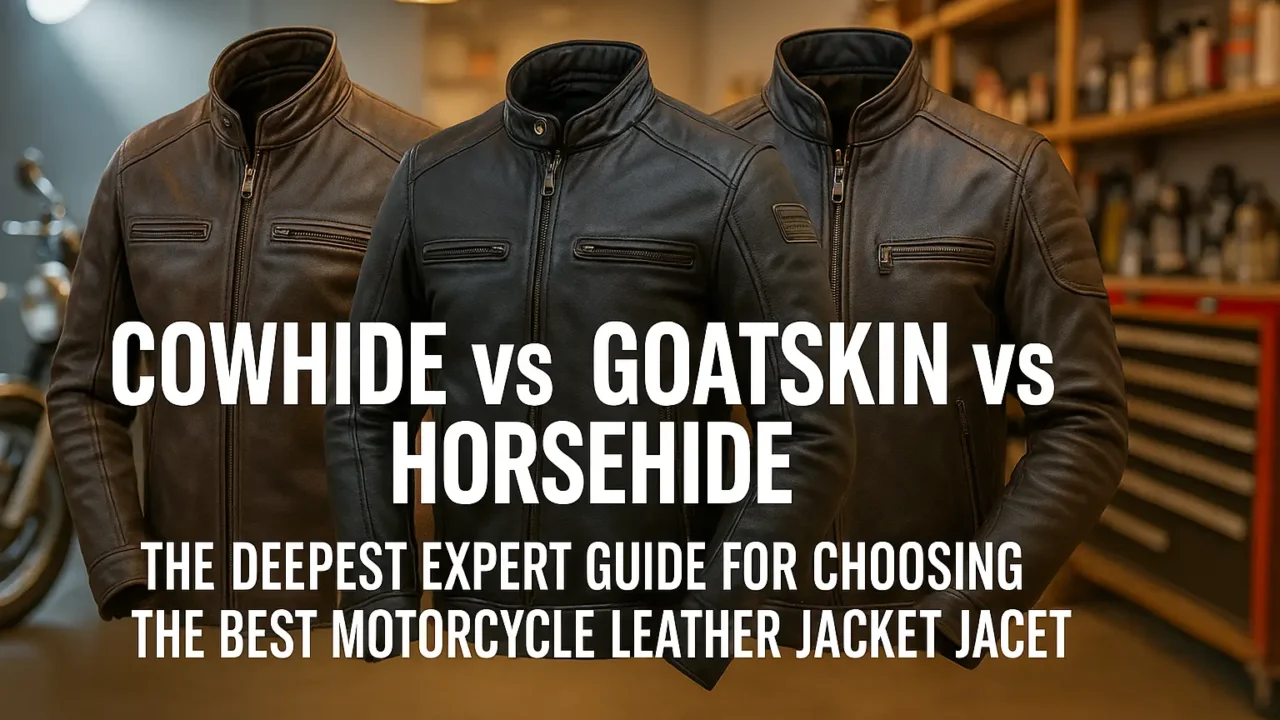
What every rider in the United States wants from a leather jacket is the same: real protection, real durability, and real performance over long miles of American roads. But the moment you begin searching for a motorcycle leather jacket, you’re hit with confusion—cowhide, goatskin, horsehide—which one is actually best? And why do different riders swear by different leathers?
Most brands do not explain the real differences: they use vague terms like “premium leather” or “genuine leather,” making riders wonder whether they are investing in protection that will actually last or just a fashion jacket.
This guide solves that confusion once and for all. Finally, in one comprehensive, expert-backed article, you’ll understand how cowhide, goatskin, and horsehide differ in fiber structure, abrasion resistance, tensile strength, break-in behavior, climate performance, and long-term durability.
Most importantly, you will know which leather is best for your style of riding, whether you’re a cruiser rider in Arizona, a commuter in New York, a sport rider in California, or a long-distance tourer crossing multiple states. At the end, you will be confidently able to choose a premium leather motorcycle riding jacket that fits your needs—and make an informed decision when exploring the Tuxar Leather Jacket Collection designed with the American rider in mind.
Cowhide Leather—The Classic American Standard
Cowhide is the most used motorcycle leather in the U.S. due to its ideal balance of strength, comfort, and affordability. It’s the leather that shaped classic American biker culture, from vintage highway cruising to modern commuting.
1. Deep Fiber Structure
Cowhide fibers form thick, dense bundles arranged in interwoven patterns. Thus, in cowhide:
- Highly resistant to tears
- Resistant to repeated loads or stresses.
- Excellent abrasion behaviour on asphalt
Cowhide usually comes in 1.2–1.4 mm thickness for motorcycle jackets, which is well above the minimum requirement for most safety standards.
2. Abrasion Resistance (Scientific View)
In practical testing:
1.3 mm cowhide survives between 3.5 and 4 seconds of asphalt sliding.
This exceeds basic EN 17092 safety requirements.
A few seconds may not seem like much, but in real crashes, it can mean the difference between walking away and suffering severe road rash.
3. Comfort & Break-In
Cowhide has a medium break-in period. It slowly molds to your body due to:
- Natural oils
- Heat from riding
- Movement during long trips
This creates the iconic vintage-leather biker-jacket feel that American riders love.
4. Weather Performance
Cowhide handles a wide range of climates, performing best in:
- Midwest and northern states (cooler temperatures)
- States with mixed humidity
- Long-distance highway cruising
In very hot states, like Arizona or Texas, cowhide can feel heavier but still provides solid protection.
5. Best For:
- Highway riders
- Cruiser riders (Harley, Indian)
- Touring riders
- Everyday commuters
- Riders who want balanced protection and comfort
Goatskin Leather—Military-Grade Lightness & Flexibility
Goatskin is highly valued in aviation and military gear, especially in U.S. Air Force flight jackets, because it delivers exceptional strength at a remarkably low weight.
1. Unique Fiber Structure
Goatskin has a tight, naturally pebbled grain. The fibers are compact and short, giving it:
- High tensile strength
- Excellent flexibility
- Crack resistance over the years of wear
Lanolin (natural oils in the hide) adds softness and water resistance, making goatskin ideal for riders who experience rain or humidity.
2. Abrasion Test
Goatskin at 1.0–1.2 mm thickness survives:
- 3 to 4 seconds of asphalt sliding
- Equal to cowhide, despite being lighter
This is why many premium sport and touring jackets use goatskin panels.
3. Ultra-Light Comfort
Goatskin is significantly lighter than cowhide or horsehide. This reduces:
- Arm fatigue
- Shoulder strain
- Heat retention
It feels incredibly comfortable during long rides.
4. Climate Behavior
Goatskin performs best in:
- Hot states: Florida, Texas, California, Arizona
- Humid states: Georgia, Alabama, Louisiana
- Long-duration touring in shifting weather
Its natural oils and breathability keep you cooler and more comfortable.
5. Best For:
- Daily commuters
- Sportbike riders
- Touring riders
- Hot and humid climate riders
- Anyone who wants comfort without sacrificing safety
Horsehide Leather—The Premium, Indestructible Legend
Horsehide is considered the toughest and most premium leather used in motorcycle jackets. Historically, it protected American pilots and riders in extreme conditions. Today, it remains the top choice for riders who value ruggedness and heritage.
1. Extreme Fiber Density
Horsehide fibers are longer, straighter, and tightly packed. This gives it:
- Maximum abrasion resistance
- Minimal stretching
- Rock-solid structure even after decades of use
You can feel the density the moment you hold it.
2. Unmatched Abrasion Survival
Horsehide (1.3–1.5 mm) survives:
- 4 to 5+ seconds of asphalt sliding
- The highest among commonly used jacket leathers
In real crash conditions, this extra second or two can significantly reduce skin exposure.
3. Break-In (The Honest Truth)
Horsehide starts very stiff.
This stiffness is a sign of its strength.
Over time, with heat, movement, and conditioning, it relaxes and develops a legendary deep patina—something cowhide and goatskin cannot match in richness.
4. Weather Resistance
Horsehide performs exceptionally well in:
- Cold and wet states: Washington, Oregon, Colorado, New York
- Windy and variable climates
- Rough, long-distance riding conditions
Its oil-rich structure resists rain and cold better than most leathers.
5. Best For:
- Harley and cruiser riders
- Vintage motorcycle enthusiasts
- Riders who want maximum protection
- Riders who want a jacket that lasts 20–30 years
Tuxar jackets include horsehide-inspired finishes with easier break-in comfort:
Deep Comparison Table
| Property | Cowhide | Goatskin | Horsehide |
|---|---|---|---|
| Abrasion Survival | 3.5–4 sec | 3–4 sec | 4–5+ sec |
| Tensile Strength | 8–10k psi | 10–12k psi | 12–14k psi |
| Flexibility | Medium | Very High | Low (initial) |
| Weight | Medium | Light | Medium–Heavy |
| Break-In | Medium | Fast | Slow |
| Water Resistance | Medium | High | Very High |
| Patina Development | Good | Medium | Exceptional |
| Lifespan | 5–10 yrs | 6–12 yrs | 20–30 yrs |
| Best For | All-round riding | Comfort/Heat | Maximum protection |
Which Leather Should YOU Choose?
1. City Riders
Goatskin
Light, flexible, breathable, and doesn’t feel heavy in traffic.
2. Highway and Inter-State Riders
Horsehide or Cowhide
Better wind resistance and slide protection.
3. Vintage & Cruiser Riders (Harley/Indian)
Horsehide
Best patina, weight, and authenticity.
4. Hot Climate Riders (California, Arizona, Texas)
Goatskin
Stays cooler under the sun.
5. Touring Riders
Cowhide
Balanced comfort and protection.
All leather types available in the Tuxar collection:
Why Tuxar Leather Jackets Are Built for American Riders
Tuxar jackets use:
- Motorcycle-grade leather (1.1–1.4mm)
- Reinforced double and triple stitching
- CE-armor compatible pockets
- Full-grain leather options
- Premium tanning processes for deeper color stability
- Vintage and modern biker fits
These jackets are engineered for:
- US highways
- Hot climates
- Cold northern states
- Long-distance riding
- Everyday commuting
Tuxar combines traditional craftsmanship with modern protective design—giving American riders incredible value compared to high-cost US brands.
FAQ
1. Which leather is safest for motorcycle jackets?
Horsehide offers the highest abrasion resistance, closely followed by cowhide and goatskin.
2. Is goatskin durable enough for high-speed riding?
Yes. Goatskin often surpasses cowhide in tensile strength.
3. How long does a horsehide jacket last?
With proper care, 20–30 years or more.
4. Which leather breaks in the fastest?
Goatskin—soft from day one.
5. Is cowhide still a good choice for beginners?
Absolutely. It’s the best all-rounder for new riders.